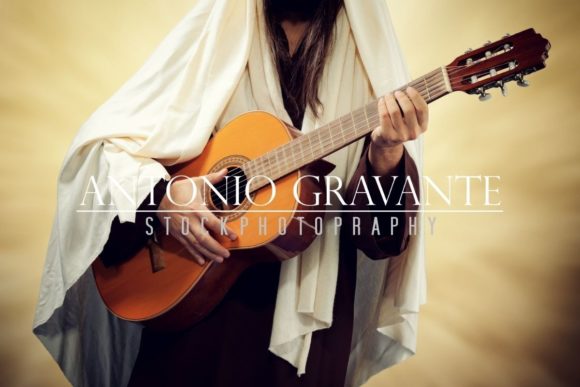
Jesus Christ Plays Guitar: Integrating Creative Vision into Your Workflow
Every creative project begins with a spark—an idea that refuses to stay quiet. Jesus Christ Plays Guitar represents exactly that kind of spark: a conceptual musical project that blends artistic expression with deliberate craft. Whether you encounter it as an album, a performance concept, or a thematic body of work, understanding how to engage with such a project goes beyond passive listening. It becomes a lens for examining your own creative process, planning methods, and execution strategies.
What Jesus Christ Plays Guitar Means for Creative Professionals
At its core, Jesus Christ Plays Guitar is a title that signals a collision of the sacred and the everyday, the profound and the accessible. It suggests that creative work can carry weight without becoming pretentious. For professionals across industries—marketers, educators, content creators, entrepreneurs—this kind of project offers a working example of how to hold tension between concept and execution. You do not need to be a musician to extract value from it. The underlying principle applies to any domain: strong concepts need disciplined delivery.
Where It Fits in a Broader Process
Consider Jesus Christ Plays Guitar as a case study in thematic development. Before you start any project, you decide on a core idea that will anchor every decision. That anchor is the title, the mood, the central question. In a workflow context, this is your planning phase. You define what you are building and why it matters. Jesus Christ Plays Guitar demonstrates that a memorable, slightly provocative concept can carry an entire body of work if the execution matches the ambition.
During the execution phase, the project shows how to maintain coherence. Every track, visual element, or performance detail must reinforce the central idea. This is where many creators stumble—they start with a strong concept but drift into unrelated tangents. The discipline of sticking to a thematic thread is what separates finished work from abandoned experiments.
After completion, Jesus Christ Plays Guitar becomes a reference point. You can revisit it to study how choices were made: instrumentation, pacing, lyrical content, silence, and emphasis. This retrospective analysis is valuable for anyone who wants to improve their own output, whether you write articles, design courses, or build products.
Using Jesus Christ Plays Guitar Before, During, and After Your Work
Integrating a creative reference like this into your routine is not about imitation. It is about extracting principles that transfer to your own context. Here is how you can position it across different stages of your work.
Before a Project: Setting the Conceptual Foundation
When you are planning a new initiative—a course launch, a brand campaign, a blog series—study how Jesus Christ Plays Guitar establishes its identity. Ask yourself: What is the single idea that everything else will serve? The project does not try to be everything at once. It picks a lane and commits. This clarity is rare and valuable. Write down the core concept for your own project in one sentence. If you cannot, you are not ready to begin.
Use the title as a prompt for brainstorming. Write down ten possible project titles that carry similar weight—unexpected, memorable, and emotionally resonant. This exercise strengthens your ability to communicate complex ideas simply.
During Execution: Maintaining Thematic Discipline
As you work, check every element against your central idea. Jesus Christ Plays Guitar likely makes deliberate choices about tone, instrumentation, and pacing. Nothing is accidental. Apply this rigor to your own process. If you are writing a guide, does every section serve the core promise? If you are building a product, does every feature align with the original vision? The discipline of saying no becomes easier when you have a strong reference point.
Create a checklist based on what you observe in the project. For example: Does this section advance the narrative? Does this visual element reinforce the mood? Does this feature solve the intended problem? Use the project as a calibration tool for your own quality control.
After Completion: Retrospective and Iteration
Once your work is finished, compare your process to what you inferred from Jesus Christ Plays Guitar. Where did you compromise on your concept? Where did you strengthen it? This reflection is not about judgment—it is about pattern recognition. Over time, you will notice which decisions produce the best outcomes, and you can repeat those patterns intentionally.
Share your observations with a collaborator or team. Talking through what you learned from a reference project builds a shared vocabulary for quality. It also makes abstract concepts like "thematic coherence" concrete and discussable.
Interaction with Other Tools, Methods, and Resources
No project exists in isolation. Jesus Christ Plays Guitar interacts with a wider ecosystem of creative tools and platforms. Consider how it might connect to methods you already use.
Music Production Software and Hardware
If the project involves recorded music, it likely relies on digital audio workstations, microphones, instruments, and mixing techniques. For creators outside music, this is analogous to the core tools of your trade—writing software, design tools, coding environments, video editing suites. Studying how the project uses its tools can reveal workflow efficiencies. For example, does it favor live recording over heavy editing? That choice affects speed, authenticity, and post-production effort.
Distribution Platforms and Audience Building
A project like Jesus Christ Plays Guitar gains traction through streaming services, social media, live performances, and community engagement. For marketers and entrepreneurs, this offers a real-world example of content distribution. Observe how the project structures releases, interacts with listeners, and builds anticipation. These patterns translate directly to launching a product, publishing content, or growing a newsletter.
Ask yourself: What would the launch sequence look like if every post, teaser, and announcement served the same conceptual anchor? You can map this sequence for your own next release, borrowing the pacing and cadence you observe.
Collaboration and Feedback Loops
Few creative projects are truly solo. Jesus Christ Plays Guitar likely involves producers, engineers, visual artists, and perhaps other musicians. This teaches a lesson about collaboration: clarity of vision reduces friction. When everyone understands the core concept, decisions happen faster, and revisions are more targeted. For freelancers and small business owners, applying this means writing a clear creative brief before starting any collaborative project. It saves time and preserves quality.
Practical Implementation Tips for Your Own Routine
You do not need to overhaul your entire process to benefit from studying a project like this. Small, consistent adjustments produce lasting change.
Start with a Single Principle
Pick one aspect of Jesus Christ Plays Guitar that resonates with your current challenge. Maybe it is the clarity of the concept. Maybe it is the consistency of the execution. Focus on that single principle for your next project. Write it on a sticky note and keep it visible while you work. This narrow focus prevents overwhelm and builds momentum.
Create a Reference Library
Collect projects that exemplify strong thematic integrity. Jesus Christ Plays Guitar can be one entry in a growing library of references. When you feel stuck or uncertain, revisit this library to restore your sense of direction. Over time, you will develop an intuitive sense for what works, because you have internalized multiple examples.
Use the Project as a Teaching Tool
If you mentor others, teach courses, or lead teams, Jesus Christ Plays Guitar can serve as a case study. It is concrete enough to analyze, yet flexible enough to apply across disciplines. Ask your team or students to identify the core concept, list the decisions that support it, and propose alternatives. This exercise sharpens critical thinking and builds a shared framework for evaluating creative work.
Set a Quality Threshold
Before releasing any piece of work, ask yourself: Does this meet the standard I inferred from the projects I admire? This is not about comparison—it is about having a clear bar. Jesus Christ Plays Guitar likely sets a tone that is intentional, not accidental. Use that level of intentionality as your floor, not your ceiling.
Long-Term Use and Continuous Improvement
A single project can inform your work for years if you engage with it repeatedly. Revisit Jesus Christ Plays Guitar at different stages of your career. You will notice new details each time because your own experience changes what you see. What looked like a production choice early on might later reveal itself as a structural decision. This layered learning is one of the most powerful ways to grow.
Keep notes on what you observe. Over time, those notes become a personal field guide to effective creative work. You will not need to start from scratch with every new project because you have accumulated principles that transfer across contexts. This is the practical value of engaging deeply with a single, well-executed concept.
Adapting the Approach to Different Media
The lessons from Jesus Christ Plays Guitar are not limited to music. A writer can apply the same thematic discipline to a book or article series. A course creator can use the same conceptual clarity to structure a curriculum. A product designer can ensure every feature serves the core user need. The medium changes, but the principle remains: strong concepts require disciplined execution. Train yourself to see the principle, not just the surface, and you will be able to apply it anywhere.
Final Observations on Integration
Integrating a creative reference into your workflow does not mean copying it. It means understanding why it works and extracting the logic behind the choices. Jesus Christ Plays Guitar, like any strong project, rewards careful study. The more you look, the more you see. And the more you see, the better equipped you are to make your own work clear, coherent, and compelling.
Let the project be a companion to your process, not a template. Use it to ask better questions, set higher standards, and stay curious about what your own creative voice can become. That is how a single reference point evolves into a lasting part of your practice—not because you imitate it, but because it taught you how to think about your own decisions with greater intention.