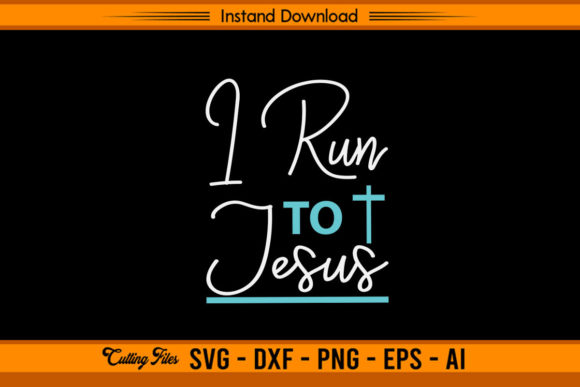
I Run to Jesus – Christian: A Faith-Driven Typeface for Modern Creative Work
Every now and then, a typeface crosses your desk that doesn't just look good—it feels like it was made for something specific. That's the case with I Run to Jesus – Christian. This isn't a neutral workhorse font you throw onto a page without thinking. It carries personality, warmth, and a clear sense of purpose. If you've been searching for a typeface that pairs spiritual resonance with real visual polish, this one deserves a closer look.
What Makes I Run to Jesus – Christian Stand Out
At first glance, I Run to Jesus – Christian reads like a handwritten font that someone actually sat down and crafted with intention. The strokes have a natural, human rhythm—slight variations in pressure, gentle curves, and a pace that feels more like a heartfelt note than a mechanical alphabet. It sits comfortably in the display font category, meaning it's built to lead the visual conversation rather than blend into background text.
The letterforms lean toward a script font sensibility but without the fussy flourishes that can make traditional scripts feel outdated or overly ornate. Instead, you get a clean, readable flow that still feels personal. The lowercase characters connect naturally, and the uppercase letters carry just enough weight to anchor a headline or title. There's a warmth to the spacing—neither cramped nor airy—that makes the whole thing feel approachable.
Personality-wise, this typeface lands somewhere between modern typography and classic devotion. It doesn't try to be trendy in a way that will age poorly. It's not trying to look like a coffee shop chalkboard or a vintage revival for the sake of nostalgia. Instead, I Run to Jesus – Christian feels grounded. It has the kind of quiet confidence you want when your message matters and you don't want the font to get in the way—you want it to help.
Where This Font Shines Across Projects
Because I Run to Jesus – Christian has such a distinct voice, the key is knowing where to let it lead and where to use it as an accent. Here are the applications where it consistently delivers strong results.
Faith-Based Branding and Logo Design
This is the most natural fit. Whether you're building a brand identity for a local church, a ministry, a Christian conference, or a faith-based nonprofit, this typeface brings an organic, human feel that stock fonts rarely achieve. In logo design, it works beautifully as the primary wordmark—especially when paired with a simple symbol or icon. The handwritten quality signals authenticity, which is exactly what most faith-driven organizations want to communicate.
I've seen it used effectively on church signage, worship series graphics, and even denominational print materials. One designer I know paired it with a clean sans serif font for body text on a church website, and the contrast was striking—the warmth of the script against the neutrality of the sans serif created a clear visual hierarchy that made the site feel both professional and welcoming.
Editorial and Publishing Projects
If you're working on devotionals, Bible study guides, Christian magazines, or any faith-based editorial design, this typeface is a strong candidate for pull quotes, chapter titles, and section headers. It breaks up long text blocks with a human touch. Readers respond to that shift—it signals that something important or personal is being said.
A publisher I worked with used I Run to Jesus – Christian for the title treatment and chapter openers in a 30-day devotional. The feedback from readers was that the font made the book feel less like a mass-produced product and more like something written just for them. That's the kind of audience engagement a well-chosen typeface can create.
Packaging and Product Design
Christian-themed products—journals, gift items, candles, home decor, stationery sets—benefit from a font that feels handcrafted. In packaging design, I Run to Jesus – Christian works well on labels, tags, and boxes where you want the product to feel personal and intentional. It's especially effective on smaller items where a heavy, formal typeface would feel overwhelming. The light, flowing strokes keep the design approachable.
Web Design and Social Media Graphics
On screen, this typeface maintains its readability better than many handwritten font options. It doesn't break apart at smaller sizes, and the stroke contrast is balanced enough to hold up on mobile devices. For social media graphics—Instagram quote cards, Facebook event banners, YouTube thumbnail titles—it adds a layer of authenticity that polished sans serifs sometimes lack.
For web design, I'd recommend using it sparingly: a hero section heading, a testimonial pull quote, or the main title on a landing page. Pair it with a clean serif font or neutral sans serif font for body copy, and you've got a font pairing that feels both contemporary and timeless.
How the Font Influences Readability and Perception
Every typeface affects how people receive your message, whether you intend it or not. I Run to Jesus – Christian does something specific: it lowers the emotional barrier between the content and the reader. The handwritten nature suggests a real person wrote this, which builds trust. That's especially valuable in faith contexts where the reader is looking for connection, not corporate polish.
In terms of readability, this font performs best at medium to large sizes. It's a display font at heart, so using it for long body paragraphs will tire the eye. But for headings, subheadings, short quotes, and emphasized text, it's remarkably clear. The letterforms are distinct enough that readers won't confuse similar characters, and the baseline is consistent, which helps maintain a steady reading rhythm.
Visual hierarchy becomes easier when you use this font as your anchor. Because it has such a strong personality, it naturally becomes the first thing the eye lands on. That lets you build a clear structure: the headline in I Run to Jesus – Christian, the subhead in a complementary typeface, and the body text in something neutral. The contrast does the work for you.
From a brand perception standpoint, choosing this font signals intentionality. It says you cared enough to select a typeface that matches your message. For consistency, using it across different mediums—print, digital, social, packaging—creates a unified visual identity that people recognize over time. That recognition is the foundation of brand identity and long-term audience trust.
Practical Guidance for Choosing and Using This Font
Before you commit I Run to Jesus – Christian to a project, take a few minutes to evaluate whether it fits your specific needs. Here's a practical checklist I've developed over years of working with design assets like this one.
Evaluate Project Fit
Ask yourself: Does this project need a human, personal voice? If you're designing for a corporate client with no faith angle, this probably isn't your font. But if the message is personal, spiritual, or community-focused, it's worth testing. Look at your content first—then decide if the font amplifies it.
Test Font Pairings
I Run to Jesus – Christian pairs well with clean, understated typefaces. Try it with a simple serif font like Lora or Cormorant Garamond for a classic feel, or pair it with a neutral sans serif font like Inter or Open Sans for a more modern contrast. Avoid pairing it with another script font—you'll lose the hierarchy and create visual noise.
Review Included Styles and Weights
Most versions of this font come with a standard set of characters, including uppercase, lowercase, numerals, and basic punctuation. Check whether the package includes alternate glyphs or swashes if you need them. For most projects, the core character set is sufficient. If you need multiple weights (light, bold, etc.), confirm those are available before you build your design around a single weight.
Consider Readability at Different Sizes
Test the font at the sizes you'll actually use. At 18–24px on screen, it should remain legible for short phrases. For print, test it at the physical size it will appear—sometimes a font that looks great on screen at 100% doesn't scale down well on a product label. Make adjustments early.
Review the Commercial Licensing
This is critical. If you're using I Run to Jesus – Christian for any commercial font application—client work, product packaging, published materials, web use—verify the license covers your specific use case. Some premium font licenses limit the number of projects or require extended licenses for large-scale distribution. Read the terms carefully. The last thing you want is to build a whole brand identity around a font only to discover you don't have the rights to use it in your final deliverables.
Final Thoughts from Experience
Over the years, I've seen plenty of typefaces get chosen for the wrong reasons—because they look trendy, because a client's cousin recommended them, because they were free. I Run to Jesus – Christian is a creative font that deserves to be chosen for the right reasons: because it fits the message, because it connects with the audience, and because it elevates the work without overpowering it.
If you're building something that needs to feel personal, faithful, and genuinely human, this typeface is a tool worth having in your kit. Use it intentionally, pair it thoughtfully, and let it do what good modern typography always does—help people hear what you're saying, one word at a time.